
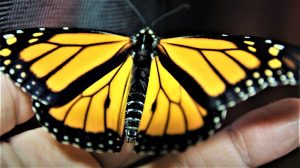
Last week, I finally saw my first monarch butterfly of the season at Blue Marsh Lake, a recreational hotspot with 6200 acres of land, trails, picnic areas, swimming area and boat launches. Fields of common milkweed plants blanket part of the acreage. Which is where I had my first monarch sighting for 2020 last Thursday, July 2nd. It’s been a long wait to see this gorgeous creature again. I released my last butterfly last year on October 7th, 2019.
Common milkweed is a host plant and a nectar plant specifically meant for monarch butterflies. They not only drink from these native plants, the females lay their eggs on the bottom of the leaves.
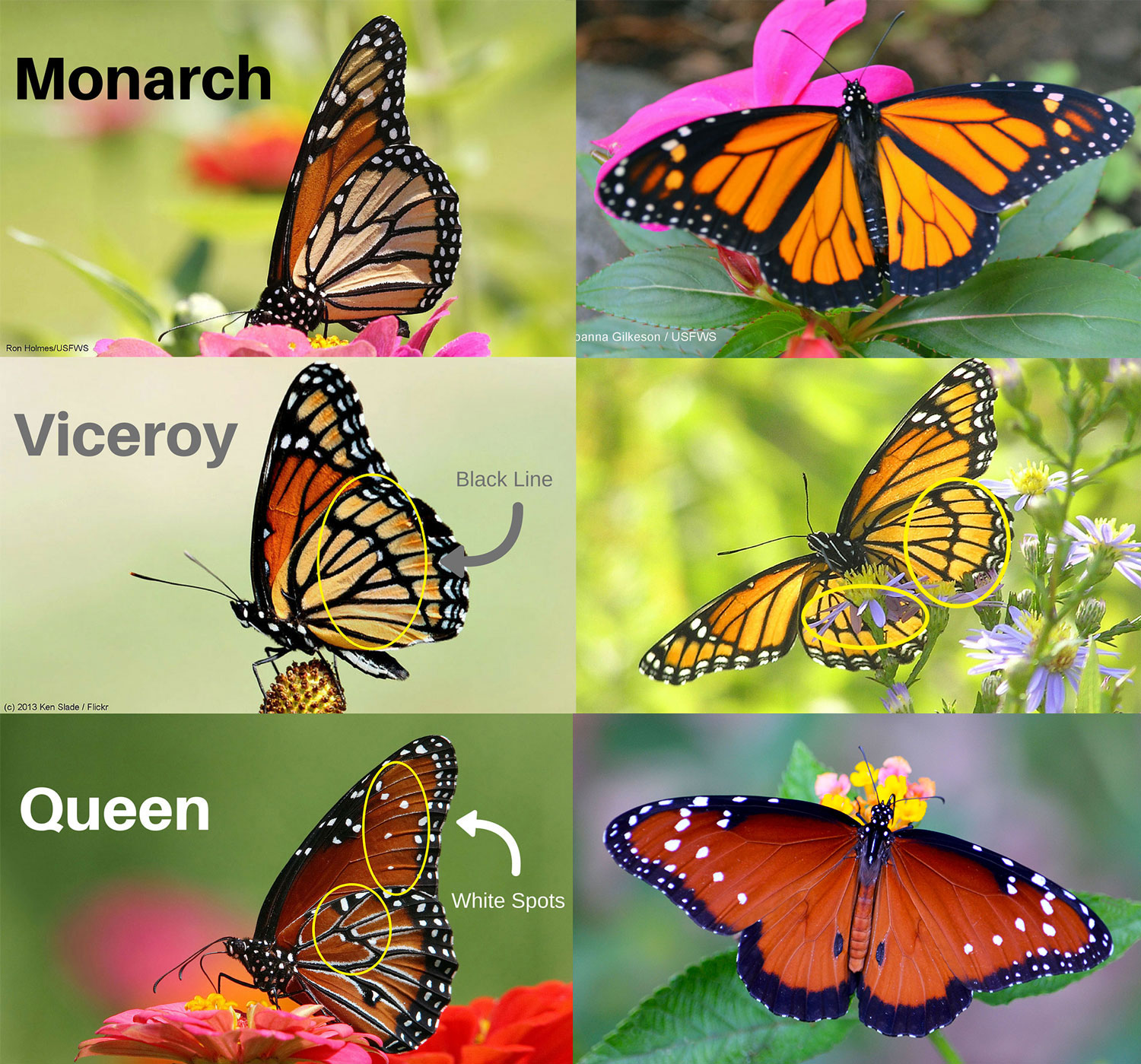
When I saw the first monarch I knew instinctively it was a monarch. You can’t mistake this gorgeous butterfly. Well, technically there are two orange butterflies who have similar characteristics as the monarch, the viceroy and the queen. But, there is only one monarch butterfly and there is no mistaken it.
A week later on July 9th, I had the fortune of seeing three monarchs flying over the same milkweed fields. After one landed on a plant, I was hoping the butterfly had laid eggs. Not yet.
I watched as the three captivating butterflies swirled around me. It was apparent that one of them was being courted as the two danced around in the cloudless, vibrant blue sky.
The excitement of seeing the first monarchs of the 2020 season is a fulfilling feeling for me. Raising monarchs is hard work for those dedicated to increasing their dwindling populations. Last year my husband and I released 560 monarch butterflies. Several butterflies were unable to be released because of deformities in their wings. They became my “pets.”
Monarchs are migratory butterflies. The butterflies released late last summer make the migration trip to Mexico where they overwinter. The last generation of monarchs lives up to 7-8 months, the longest of any generation. Once spring arrives, the butterflies in Mexico begin their journey back up north. The female lays all of her eggs and dies. Once the next generation completes its metamorphosis, they mate and the female lays eggs. This cycle continues as they fly north which is where my story begins for this year.
After seeing the three butterflies I anxiously drove home to see if any monarchs were in my yard. We recently planted a host of nectar plants that monarchs definitely love. No monarchs to be seen. However, there was still another area to check for monarchs – a grassy bank that contains mostly common milkweed close to my home which generated dozens of monarch eggs and caterpillars two years ago.

Nectar plants – butterfly bush (purple,) phlox (pink,) blanket flower- some of the flowers planted in my front and backyard to draw multiple butterfly species especially monarchs photo/Tina Evangelista-Eppenstein
As I peered into the bushy plants, I saw nothing. The only activity with the milkweed was the bumblebees flying from flower to flower. I began searching under the leaves and was ready to walk back to my car when I decided to look further. And I’m glad I did. When I saw the white dot, I held it up to the light to make sure it wasn’t milkweed sap. It was my first monarch egg of the season! So happy! I’ve placed the leaf inside a container where the egg will hatch in 3-5 days.
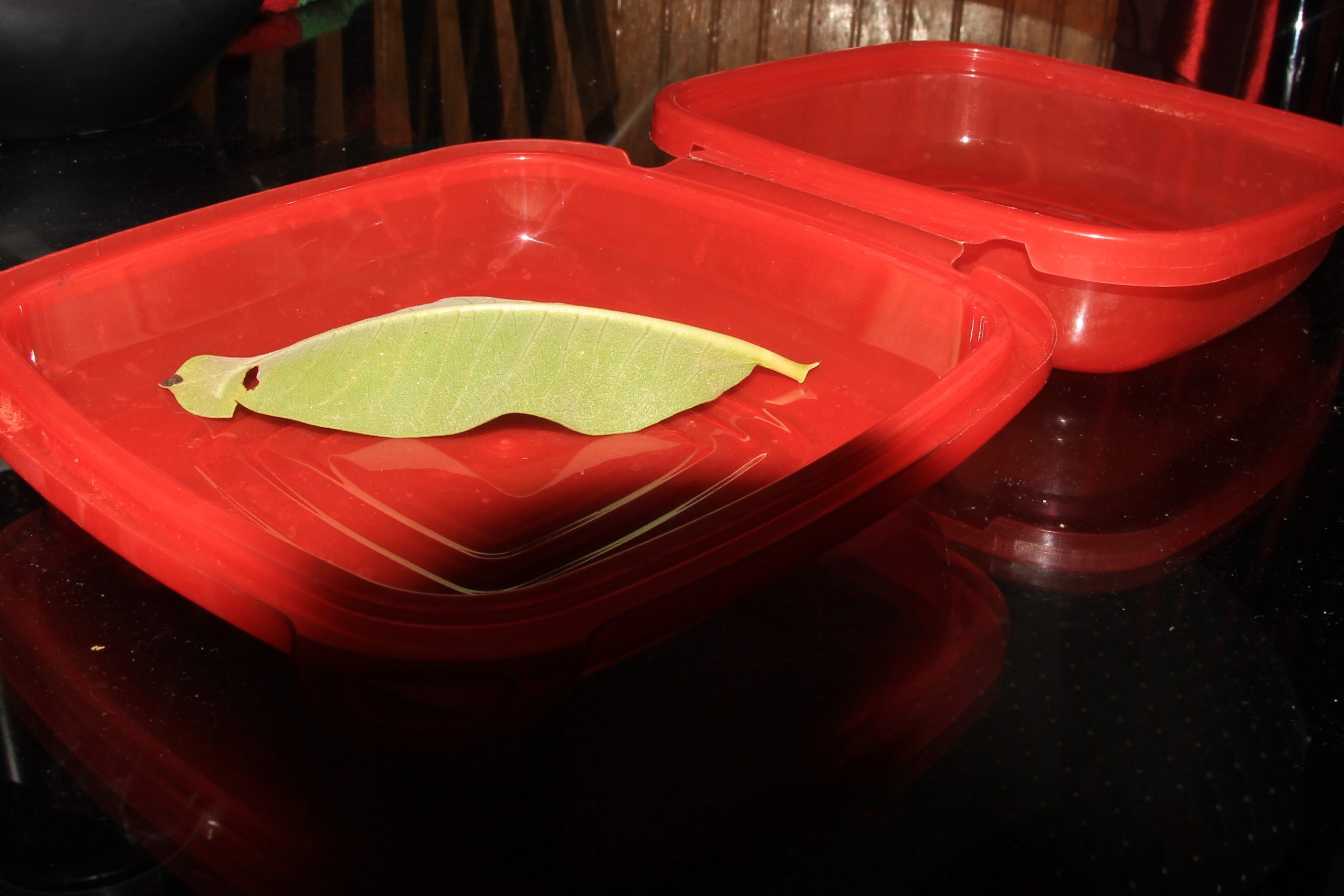
Can you see the miniscule egg? Monarch eggs are the size of a pencil head.
Tina Evangelista-Eppenstein
Once the white dot on top of the egg turns dark which is the head/face of the caterpillar, it means the caterpillar is going to hatch very shortly. The caterpillar begins its life by eating the shell of the egg. They proceed to eat the milkweed leaf. That is all they do for about two weeks. They also molt (shed their skin) five times (instars) during the larva stage until they form their emerald green chrysalis.
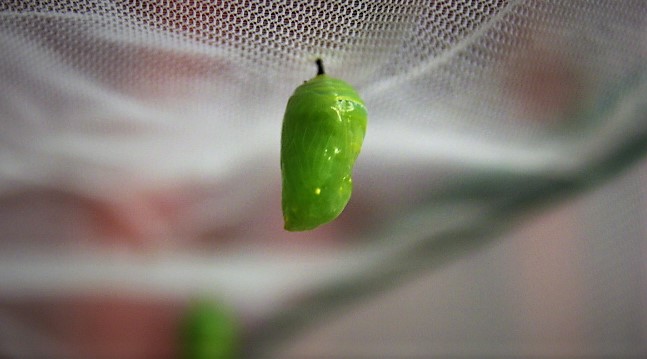
A newly formed emerald-colored chrysalis is formed after the caterpillar sheds its skin for one last time photo/Tina Evangelista-Eppenstein
My first monarch egg for the 2020 season! By August 9th, hopefully there will be a brand new monarch butterfly floating in the air following in its ancestor’s “wing”steps. It is also the beginning of raising monarchs for this year. Only 5% of monarchs survive in the wild which is why monarch enthusiasts are raising them. In the wild, natural predators, pesticides, and buildings are killing and destroying them and their habitats.
It is a lot of work to raise them for the short period of time we have but it is rewarding to see the end result.
Tina Evangelista-Eppenstein is a television talk show host, speaker, writer, and an unabashed animal advocate. Her love for animals and quest for the hard truth is what drives her passion for all things animals. She hosts the television show, “A Close Up Look at Animal Welfare Issues.” She adores her tripawd, Brody, who was a formerly abused pup who lost his leg because of cruelty inflicted upon him. If you’d like Tina to talk to your group or have a story, please email her at tevangelistaepp@yahoo.com. Like https:www.facebook.com/ACloseUpLookatAnimalWelfareIssues and be sure to check out AnimalWelfareIssues.com.
Your photos are really good. I didn’t know monarch eggs were so tiny. 😘
Thanks Sady! Can you believe how tiny the eggs are in comparison to how large the caterpillar becomes? Then they transform into a butterfly. Nature is certainly amazing!
I love monarchs and other butterflies. That’s awesome that you do this. Is it hard to do? Are monarchs on the endangered species list? I heard something to that effect.